
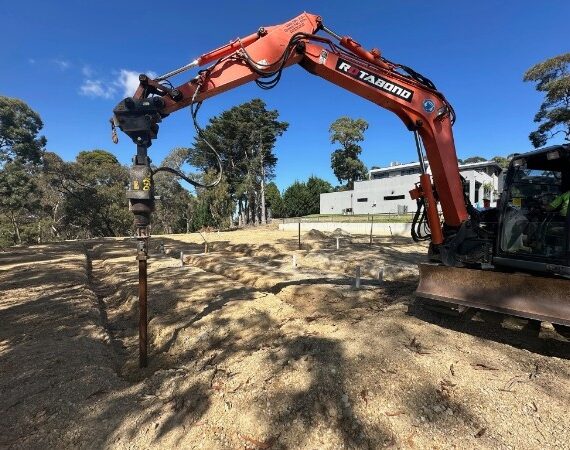
The foundation construction industry in Australia has experienced a pronounced shift with the mainstream adoption of screw pile systems, particularly across residential, commercial, infrastructure, and energy sectors. The latest innovations in screw pile manufacturing techniques have significantly enhanced performance outcomes, cost control, and environmental resilience, making them highly suitable for diverse Australian conditions—including remote terrain, coastal environments, and reactive soils.

Precision
One of the most notable advancements in screw pile manufacturing is the shift from manual fabrication to high-precision cold forming and automated welding systems. These processes enable uniform helix geometry and alignment, which are crucial for structural integrity and load distribution, especially in high-demand applications such as wind turbine bases and infrastructure projects.
Modern friction and plasma welding technologies contribute to this improvement by delivering high-strength, low-defect welds. These techniques reduce material fatigue under cyclic loading—a common issue in Australia’s variable soil profiles—and allow for the creation of custom helix configurations tailored to specific geotechnical conditions.
Material
Australian projects increasingly rely on advanced material engineering to address the continent’s diverse environmental challenges. Manufacturers now use high-tensile, low-carbon steels and micro-alloyed compositions that offer excellent strength-to-weight ratios, essential for both transport logistics and structural demands.
Protective coatings such as galvanisation and polymer-based layers are standard, particularly in coastal construction where exposure to saltwater accelerates corrosion. Recent adoption of zinc-aluminium coatings with self-healing characteristics has further improved the lifecycle performance of screw piles in aggressive soils and marine-adjacent applications.
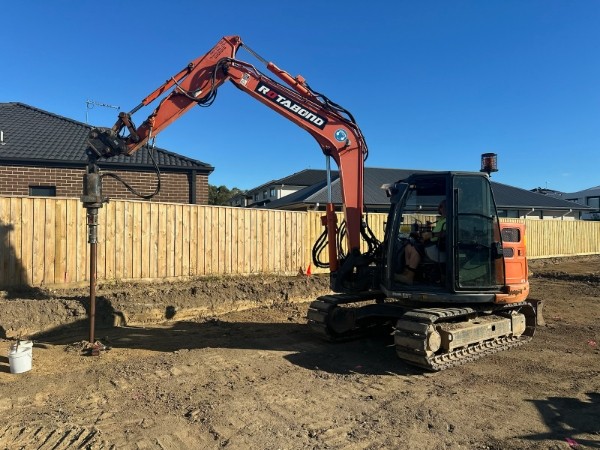
CNC
Computer Numerical Control (CNC) fabrication systems have transformed how screw piles are produced at scale in Australia. These systems ensure shaft and helix components are manufactured with tolerances accurate to the millimetre, which enhances batch consistency and reduces installation variances on-site.
Additionally, CNC systems enable rapid design adjustments, accommodating Australia’s wide range of soil types—from sandy coastlines to reactive clay regions—without incurring lengthy delays or retooling costs. This flexibility is particularly valuable for temporary event structures or telecommunications installations requiring quick deployment.
Modular
Modular and extendable screw pile designs have grown in popularity across remote and difficult-access Australian sites. These systems allow for on-site assembly using interlocking or bolted shaft extensions, reducing transport costs and eliminating the need for oversized vehicles—an important factor for projects in areas with limited infrastructure.
This modularity supports scalable foundation designs, facilitating both temporary and permanent installations. It also allows the reusability of piles in short-term applications, aligning with Australia’s growing emphasis on sustainable construction practices.
Robotics
Manufacturing facilities in Australia are increasingly leveraging robotics for screw pile production. Robotic arms and automated machinery manage helix formation, weld sequencing, and coating application with precision and consistency that surpasses manual production.
This shift reduces workplace injury risks and human error, while supporting continuous manufacturing cycles. Such consistency is particularly valuable for critical infrastructure and energy sector projects where quality assurance and traceability are non-negotiable.
Technological advancements in screw pile manufacturing are redefining the capabilities of foundation systems across Australia. Enhanced forming precision, innovative materials, CNC and robotic integration, and scalable modular designs are collectively improving structural outcomes and operational efficiencies. These innovations not only support immediate project needs in sectors like energy and infrastructure but also ensure long-term viability in Australia’s complex and varied geotechnical landscape.