

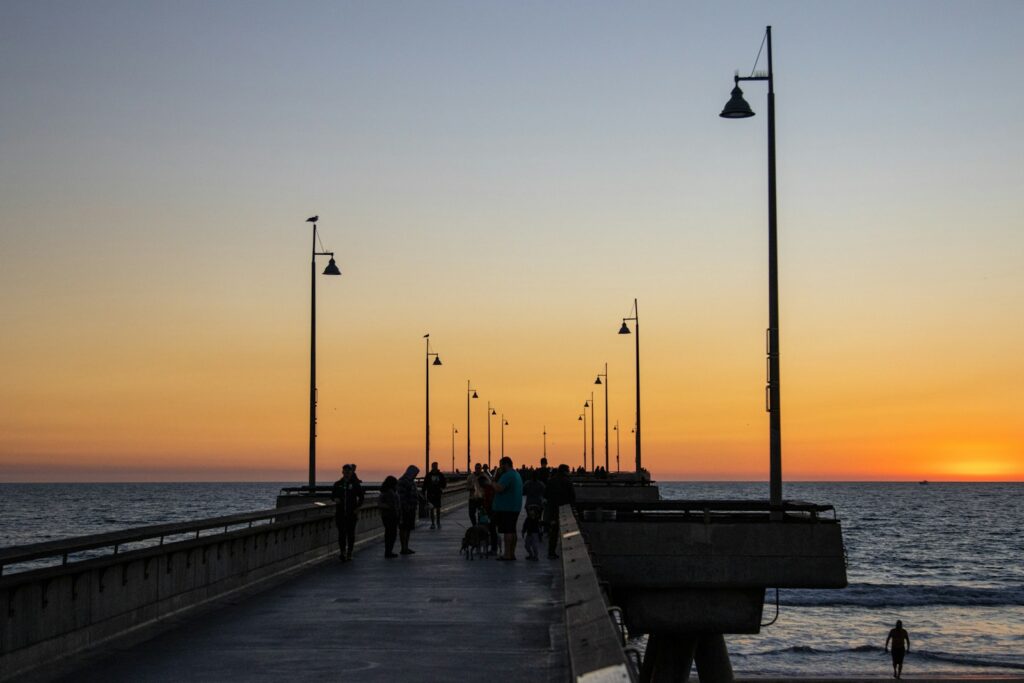
Boardwalks and pedestrian bridges require foundation systems that deliver structural stability while limiting disturbance to sensitive environments. Screw piles have become the preferred solution for these structures due to their rapid installation, adaptability to variable ground conditions, and long-term performance in wetland, coastal, and flood-prone locations.
Application
Traditional foundation methods for boardwalks and pedestrian bridges often rely on excavation, concrete placement, and extended curing periods. These processes increase environmental risk and project duration. Screw piles eliminate many of these constraints while maintaining structural reliability. Key advantages include:
- Minimal ground disturbance with no excavation spoil
- Access to remote or environmentally sensitive locations
- Accelerated construction programs
- Adjustable pile heights to accommodate slopes and varying ground levels
These benefits support efficient delivery while reducing environmental and regulatory risk.
Foundation
Effective boardwalk foundation design depends on accurate load assessment and pile layout. Typical pile spacing ranges between two and four metres, depending on span configuration and superstructure weight. Load calculations account for pedestrian traffic, wind forces, and environmental loads, with additional capacity provided at concentrated connection points. In high-use areas, dynamic loading and vibration performance are also considered during design.
Environment
Boardwalks frequently traverse locations with strict environmental constraints. Screw piles are well suited to these settings due to their low-impact installation method:
- Wetland areas benefit from zero excavation and no concrete contamination
- Tidal zones are protected through marine-grade materials and appropriate embedment depth
- Flood plains accommodate elevated structures designed to withstand periodic inundation
- Wildlife habitats experience reduced disturbance due to low noise and short installation durations
Bridges
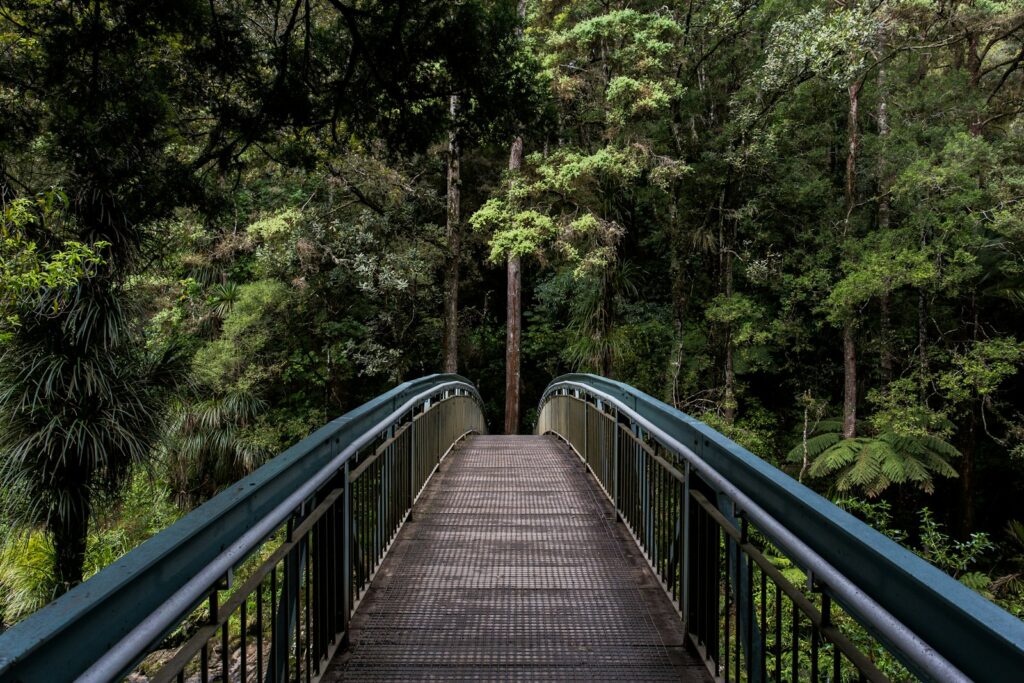
Pedestrian bridges impose higher structural demands than boardwalks, particularly where spans are longer or loads are concentrated. Screw pile foundations are engineered to address lateral loads, moment resistance at pile-to-structure connections, and settlement control across continuous spans. Vibration performance is also assessed to ensure pedestrian comfort and compliance with design standards.
Connection
The interface between screw piles and the superstructure is critical to performance. Fixed connections using welded or bolted brackets provide rigidity for continuous spans, while pinned connections allow controlled movement where required. Adjustable couplings are often incorporated to achieve precise alignment during installation and to accommodate minor ground movement over time.
Material
Moisture-rich environments require enhanced corrosion protection to achieve design life objectives. Common specifications include hot-dip galvanizing for freshwater applications, marine-grade epoxy coatings for coastal exposure, and duplex systems combining both treatments for extended durability. In aggressive environments, increased wall thickness or higher-grade steel may be specified, with stainless steel reserved for extreme conditions.
Project
Rotabond recently completed a 200-metre coastal boardwalk installation within a sensitive wetland zone. The project was delivered in five days, compared to an estimated three-week program using conventional methods. Variable pile lengths accommodated changing water depths, no excavation or concrete was required, and marine-grade coatings were specified to achieve a service life exceeding 50 years.
Installation
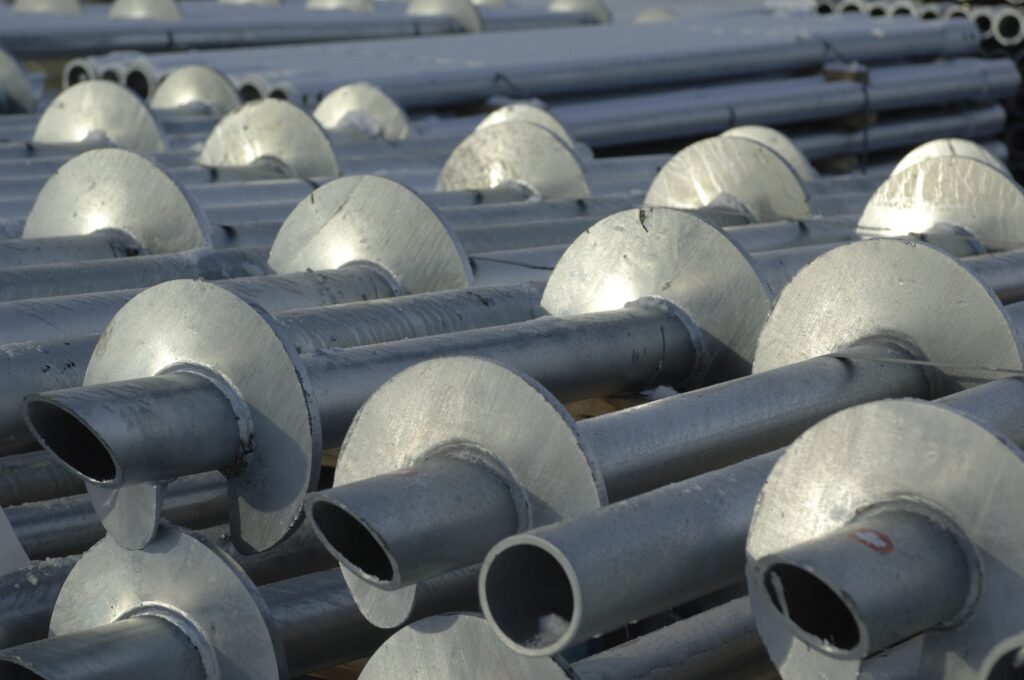
Successful installations follow established procedures to manage risk and ensure performance. These include comprehensive geotechnical investigation along the entire alignment, identification of subsurface variability, and detailed planning of access and equipment staging. During installation, torque monitoring is used to verify capacity, pile alignment is checked continuously, and representative proof testing is undertaken.
Service
Long-term performance is supported through planned inspection and maintenance. Annual visual inspections of exposed pile sections are supplemented by detailed structural assessments at five-year intervals. In flood-prone or tidal locations, post-event inspections are conducted to identify scour, debris accumulation, or coating damage requiring remediation.
Commercial
From a cost perspective, screw pile foundations typically reduce overall project expenditure. Faster installation lowers labour costs, concrete and formwork are eliminated, and environmental mitigation requirements are reduced. In some applications, piles may be removed or reused if the structure is relocated, further improving lifecycle value.
Rotabond provides end-to-end foundation solutions for boardwalk and pedestrian bridge projects across Melbourne and regional Victoria. Services include site-specific engineering design, load verification, environmental support documentation, certified installation, and comprehensive project records aligned with regulatory requirements.
For specialist advice on boardwalk or pedestrian bridge foundations, contact Rotabond on 0408 540 201. Our experience in environmentally sensitive installations ensures reliable outcomes while protecting surrounding ecosystems.